Mapping: youth engagement and international solidarity
An overview of organisations working with youth on international solidarity
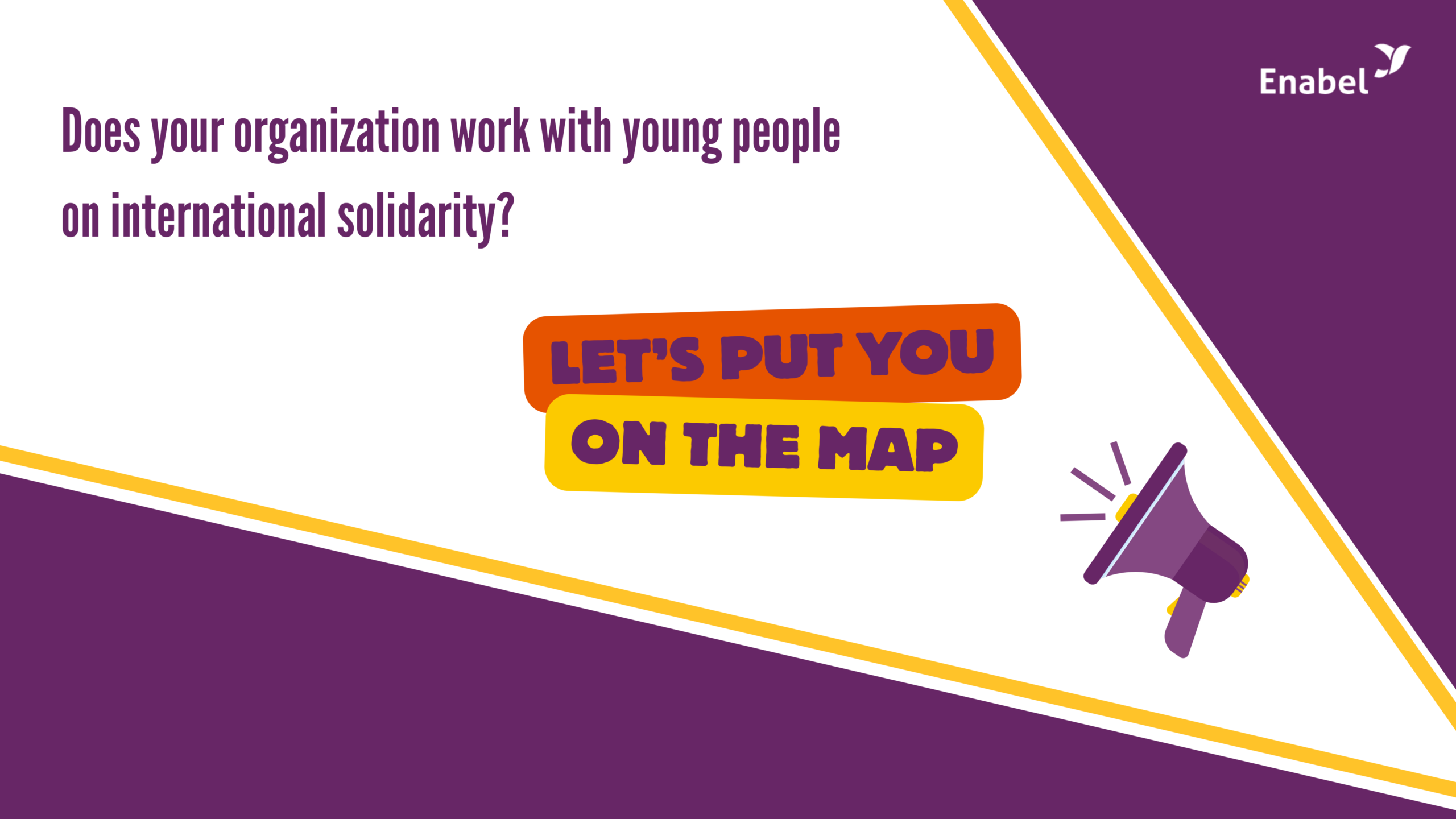
Today’s youth want to make a difference in promoting greater justice, solidarity, and a sustainable future. BeGlobal therefore wants to map out the activities and experiences of organizations working with youth aged 16 to 35 on international solidarity.
Why mapping youth engagement and international solidarity?
Young people in Belgium are growing up in a rapidly changing world with major social challenges such as polarisation, climate change, increasing social inequality, geopolitical tensions and digital transformation. At the same time, they show a great willingness to get involved and make a difference.
This engagement often arises outside the school walls within what is known as non-formal learning. Think of youth organisations, socio-cultural associations, sports and cultural initiatives, NGOs and local youth initiatives and networks. These actors play a crucial role: they reach young people in an accessible way and are closely connected to their world.
However, there is currently no up-to-date and comprehensive overview of who reaches young people, how this is done and how organisations work on global issues and international solidarity.
BeGlobal wants to change this. This mapping helps to bring together insights from the field and contributes to a better coordinated policy on youth engagement, global citizenship education and international solidarity in Belgium.
What do we want to identify with this mapping?
The mapping is about having an overview of organisations, collectives and initiatives that work within non-formal learning with young people on international solidarity.
With this mapping, we identify:
- who these actors are,
- how they work (explicitly or implicitly) on international solidarity and global citizenship,
- how they raise awareness and mobilise young people around global issues,
- which young people are reached (and which are not),
- what forms of engagement and methodologies are used,
- and what trends, needs and opportunities organisations experience in their work.
Who is included in the mapping?
Everyone who works within non-formal learning with young people aged 16 to 35 on global citizenship and/or international solidarity, in all regions of Belgium, such as:
- Youth organisations
- NGOs and civil society organisations
- Diaspora organisations
- Socio-cultural organisations
- Sports and cultural organisations
- Media
- Private organisations or foundations
- Local, regional and international authorities
How are we going to do this?
Through an online survey or an online (in-depth) interview.
The results and findings will subsequently be available on our website.
Any questions?
Feel free to contact us at mapping@enabel.be
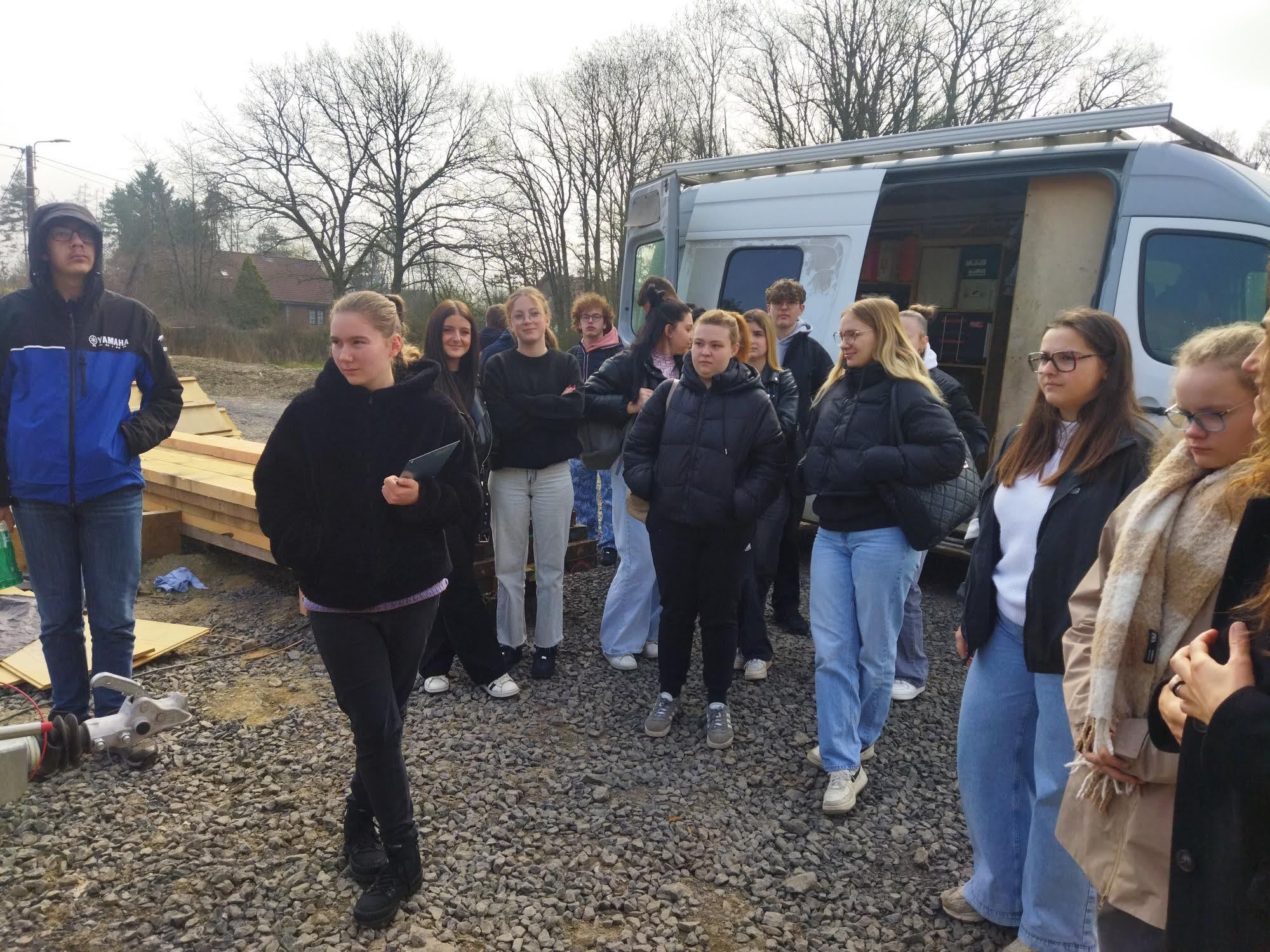
Pilot Project ‘GCE in (T)VET: students from Athénée Royal Rochefort-Jemelle Namur embark on a Journey of Discovery into Food Sovereignty
Pilot Project ‘GCE in (T)VET: students from Athénée Royal Rochefort-Jemelle Namur embark on a Journey of Discovery into Food Sovereignty
BeGlobal launched, in collaboration with Entraide & Fraternité (E&F) and the Athénée Royal Rochefort-Jemelle, a pilot project to strengthen GCE competencies of students in Technical and Vocational Education and Training (T)VET. We did so during the school year of 2024–2025, using concrete case studies under the theme of “food sovereignty.”
The “See – Judge – Act” method lies at the heart of all of Entraide & Fraternité’s projects and served as the guiding thread for every workshop. Throughout this programme, it aimed to encourage students to develop their social skills in order to act on the world, always drawing on their own experiences, while also fostering their active involvement in their own education.
The pilot project pursued two objectives:
- Developing teaching materials specifically tailored to the interests and needs of (T)VET students;
- Encouraging (T)VET students to become responsible citizens.
The second objective was assessed using three indicators:
- The students became more curious as a result of the project;
- The students are considering different prospects than those they had envisaged before the project began;
- The students feel that their self-confidence had grown.
Your ideal world
The pilot project consisted of six sessions with students specifically selected for this project. The students came from various fields of study within the vocational education program at the Athénée Royal de Rochefort-Jemelle high school, ranging from 10th to 12th grade: Sales, Childcare, Masonry, Computer Science, and Teaching Assistant.
“In what kind of ideal world do you want to live in ten to fifteen years?” The project alternated between participatory sessions, individual reflections, and discussion time in the classroom. This multidimensional approach catered to different learning styles and fostered student participation and engagement.
The group also visited real-world work settings, such as an ecological construction site and a local cooperative agroecological farm. There, they had the opportunity to meet people who are themselves thinking about their ideal world and actively bringing in their professional practice. This visit left a deep impression on the students. Afterward, the Masonry students even asked their practical course teachers to take the rest of the class on the same visit.
Self-confidence and curiosity
A significant number of students adjusted their habits and even began encouraging their family and friends to change their consumption patterns and how they interact with vulnerable people. The group raised the idea of going on an immersion trip: something they hadn’t previously considered. Both the teachers and the school psychologist noted a positive shift in terms of self-confidence and curiosity regarding GCE themes.
This impact was assessed based on both a self-evaluation and group discussions. This revealed that students were not always fully aware of the effect the programme had had on them. For example: “Although no student indicated in the self-evaluation that they had become more curious, the majority reported that they had searched for the themes covered during the project on social media, even though they had not done so previously.”
GCE in (T)VET
This program is part of BeGlobal’s “Global Citizenship Education (GCE) in Technical and Vocational Education and Training ((T)VET)” project, which launched two pilot projects during the 2024–2025 school year. Two schools, one on each side of the language border, developed and implemented a GCE pilot project in co-creation with NGOs. A pilot project was also set up in Flanders: a collaboration between KTA CLW Bruges and a consortium of the NGOs Djapo & Studio Globo.
Want to learn more about the pilot project in Dutch-speaking Belgium? Click here!
GCE in (T)VET: the study
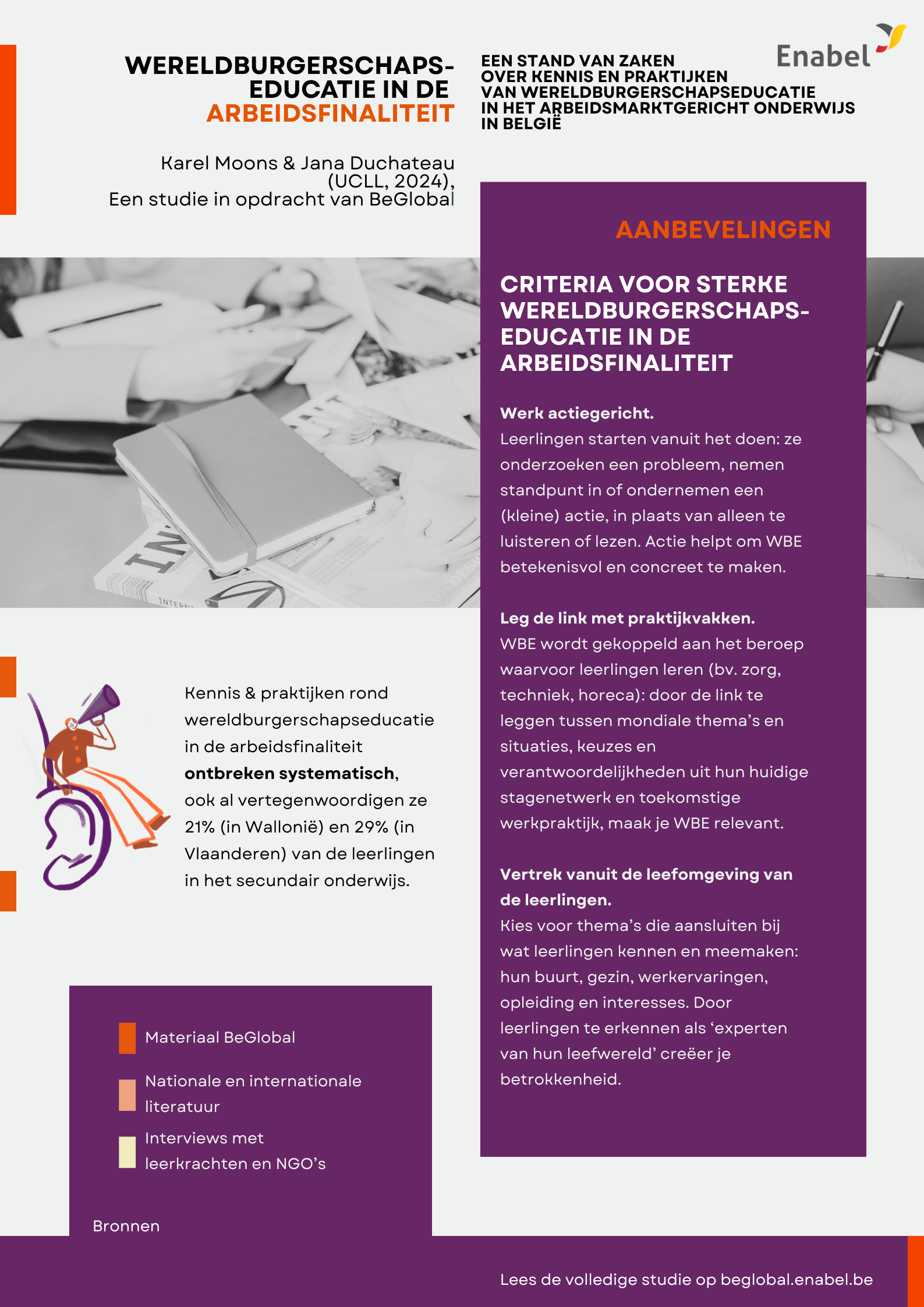
The study “Global Citizenship Education in Technical and Vocational Education and Training” was conducted in 2024 on behalf of BeGlobal by a research team from UCLL University College. The goal of the two pilot projects was to test the study’s recommendations against the reality of the school environment. They indeed confirmed the importance of an action-oriented approach, a connection to practical courses, and a link to the students’ lived experience.
Read the study ‘GCE in (T)VET’ here!
Want to learn more about the overarching project ‘GCE in TVET’? Click here!


Global Citizenship Education Magazine
Blog
Le magazine Global Citizenship Education
Une publication annuelle pour nourrir la réflexion en éducation à la citoyenneté mondiale
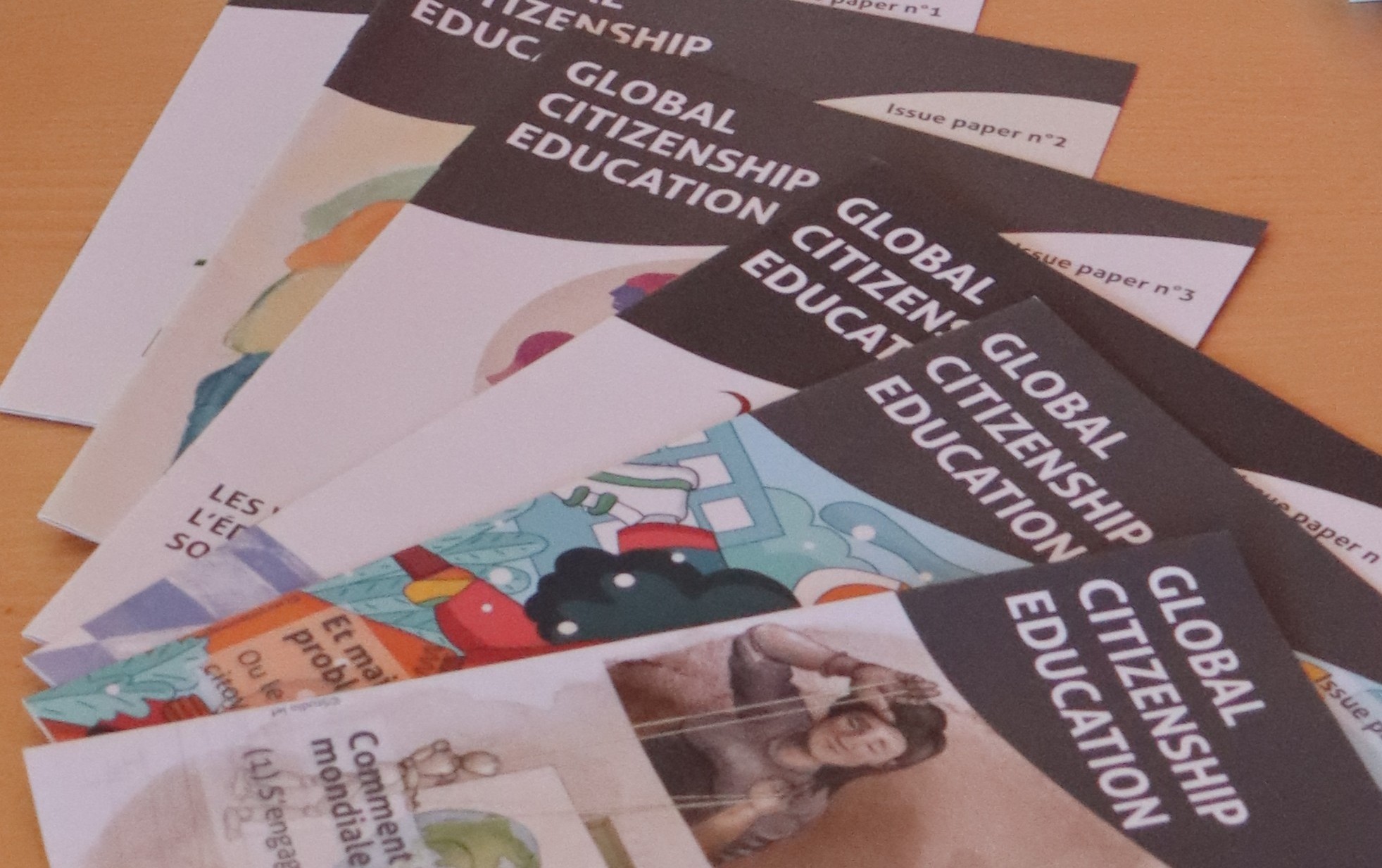
Dans le cadre de sa mission de recherche, de capitalisation et de diffusion des savoirs, BeGlobal publie chaque année un numéro du magazine Global Citizenship Education. Cette publication vise à stimuler la réflexion autour de thématiques clés en lien avec l’éducation à la citoyenneté mondiale (ECM), à partir d’analyses rigoureuses, critiques et ancrées dans les réalités éducatives actuelles.
Le magazine veut faire le pont entre recherches et pratiques, en offrant la parole à des chercheur·ses ou expert·es reconnu·es qui mobilisent savoirs scientifiques, expériences de terrain et perspectives internationales.
Ces publications sont des outils au service des acteur·trices de l’éducation, des institutions, du monde académique, et plus largement de toute personne souhaitant comprendre les thématiques clés de l’ECM, son évolution et ses défis. Chaque édition s’articule autour d’un thème central, décliné à travers quatre contributions.
Une collection pensée pour faire évoluer les pratiques
 📘 Édition 2021 – « Les tensions dans l’éducation à la citoyenneté mondiale »
➡ Cette première édition interroge les contradictions inhérentes à la mise en œuvre de l’ECM. Entre universalité des valeurs, diversité des contextes, injonctions institutionnelles et aspirations pédagogiques, quelles tensions émergent ? Et comment les aborder de manière constructive sans les nier ?
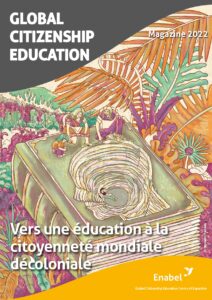 📘 Édition 2022 – « Vers une éducation à la citoyenneté mondiale décoloniale »
➡ Ce numéro explore les dimensions postcoloniales encore présentes dans les discours et pratiques éducatives, et invite à repenser l’ECM à partir de perspectives critiques, émancipatrices et plurielles. Il questionne les rapports de pouvoir, les récits dominants et les biais systémiques intégrés dans l’ECM.
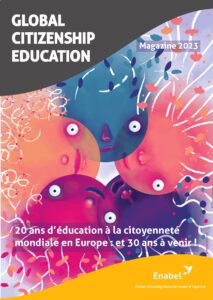 📘 Édition 2023 – « 20 ans d’éducation à la citoyenneté mondiale en Europe : et 30 ans à venir ! »
➡ Cette édition se penche sur la Déclaration européenne sur l’éducation à la citoyenneté mondiale (ECM) adoptée en 2022 à Dublin. Elle donne la parole aux protagonistes qui ont façonné cette déclaration et propose un regard sur le passé et l’avenir de l’ECM en Europe.
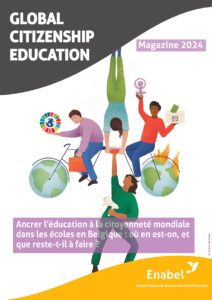 📘 2024 Edition – « Anchoring global citizenship education in Belgian scholls: where do we stand and what remains to be done?»
➡ This issue provides an overview of how GCE is being integrated into Belgian schools. It explores institutional levers, systemic barriers, and educational initiatives that contribute to lasting change in schools.
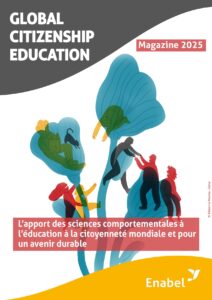 📘 2025 Edition – « The contribution of behavioural science to global citizenship education and for a sustainable future »
➡ The 2025 edition investigates how behavioral sciences – social psychology, cognitive science, and behavioral economics – can enrich educational strategies in GCE. It explores how psychological mechanisms influence our ability to understand the world, act, and respond with clarity and responsibility.
Une publication au cœur des objectifs de BeGlobal
Chaque numéro du Global Citizenship Education propose ainsi une plongée thématique qui éclaire les enjeux contemporains de l’ECM et alimente les pratiques éducatives. Une invitation à penser autrement, à apprendre ensemble et à construire, pas à pas, un avenir plus solidaire.
Envie d’élargir vos horizons et de nourrir vos pratiques éducatives ? Plongez dans la collection du magazine et laissez-vous inspirer !
Vous souhaitez recevoir un exemplaire imprimé de l’un de nos magazines ?
N’hésitez pas à nous en faire la demande via le formulaire disponible sur la page “Contact”.